26-05, Audit of the Department of Land and Natural Resources’ Division of Boating and Ocean Recreation
Posted on Feb 20, 2026 in Most Recent, Summary
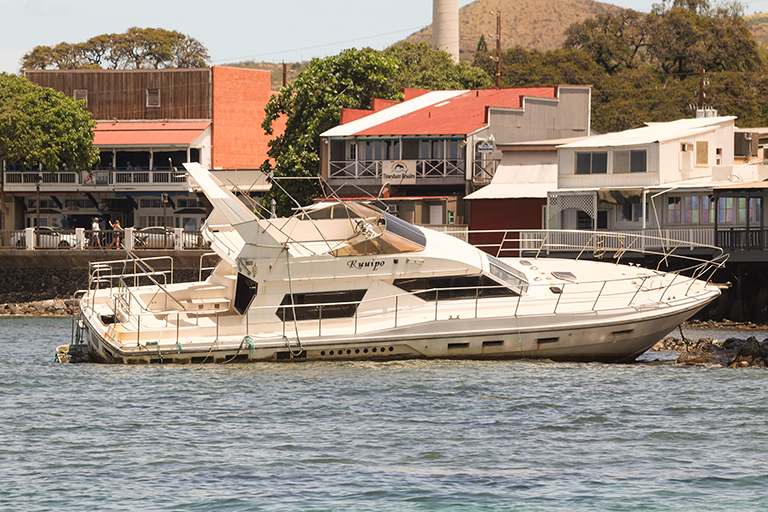 Photo: iStock.com AUDITOR’S SUMMARY Report No. 26-05 In 2019, the Department of Land and Natural Resources (DLNR) told the Legislature that it needed help to ensure that vessel owners covered costs the Division of Boating and Ocean Recreation (DOBOR) was incurring to salvage grounded, derelict, and abandoned vessels, testifying that, since 2002, more than $2.2 million had been expended from the Boating Special Fund to address grounded, abandoned, or derelict vessels. House Bill No. 1033 (Regular Session 2019) (HB 1033), which DOBOR’s then-Administrator helped author, would have required all vessel owners to have insurance of not less than $500,000 that included coverage to remove and salvage a grounded vessel. The Legislature enacted an amended version of HB 1033, limiting its application to vessels 26 feet or more in length and smaller vessels whose owner previously grounded a vessel, requiring those owners to obtain at least $100,000 in salvage insurance. Act 94 (Session Laws of Hawaii 2019), codified as Section 200-13.5, Hawaii Revised Statutes (HRS), took effect on December 31, 2019. However, we couldn’t assess whether the insurance that DLNR said was necessary has “greatly reduced,” as the department represented it would – or has even reduced – the department’s costs to remove and salvage grounded vessels; we could not determine whether the insurance requirement has helped to ensure that vessel owners are held responsible for the costs that DOBOR incurred to remove and salvage their grounded vessels. What We Found We found that DOBOR did not know the amount that it had paid to remove and salvage grounded vessels, net of repayments by responsible boaters, even before seeking legislative help through HB 1033, and for that reason, DOBOR could not determine whether the insurance requirement has effectively reduced the net amount that it has paid to address groundings. Information about amounts that owners repaid DOBOR relating to groundings was not readily accessible. The Administrator said that the division had never been asked to provide that information, telling us that staff would have to manually calculate the amount by reviewing each boater’s ledger in its accounting system. However, that is precisely the information – the net amount that DOBOR paid to address vessels aground – DOBOR must know to determine whether its primary funding source, the Boating Special Fund, is being depleted to pay for costs that are vessel owners’ responsibility; that is precisely the information DOBOR needed before requesting legislation. It is also unclear what risk DLNR wanted the Legislature’s help to address through an insurance mandate. Certain risks noted in the bill as well as DLNR’s testimony were unrelated to groundings; according to both the former and current administrators, Section 200-47.5, HRS, which was enacted well before 2019, already imposed responsibility for costs to address a grounded vessel on its owner. Instead, DOBOR wanted to address problems caused by trailered boats, i.e., those vessels that were not moored in one of the State’s small boat harbors, which constituted the majority of vessels registered in the state. The former Administrator described accidents at DOBOR’s launch ramp areas and parking lots caused by trailer vessels. “[We were] trying to cover all our bases the best we could,” he explained. We found that, soon after the law’s effective date, DOBOR informed vessel owners that they would be required to present proof of the required insurance when registering, renewing, or transferring ownership of a vessel. But, before the end of 2022, DOBOR stopped requiring its registration staff to check for salvage insurance after vessel owners said they could not obtain the coverage. DOBOR also no longer requires salvage insurance as a condition of a mooring permit. DOBOR said that it determined that insurers would not write policies that met the legal requirements. We also found DOBOR was not holding owners responsible for the costs to remove and salvage their vessels – before and after Act 94. Notably, the division did little to collect from vessel owners amounts that it paid to remove and salvage grounded vessels. DOBOR sent a single form letter to a single boat owner, demanding reimbursement. According to the Administrator, DOBOR did not send another letter or initiate any further collection action. The Administrator told us that the Department of the Attorney General did not have the capacity to help pursue collections and DLNR did not consider a collection agency a priority. The O‘ahu District Manager, however, said a single letter was “not enough” when each incident that requires DOBOR to remove a vessel aground cost $12,000 to $50,000. Why do these problems matter? DOBOR is responsible for holding boaters accountable for costs associated with their grounded vessels that, by law, are their responsibility. However, DOBOR’s efforts to recover those costs were – and continue to be – cursory and insufficient. Instead, DOBOR paid the cost to remove and salvage vessels aground using the Boating Special Fund, its primary funding source, reducing the amount available for harbor improvements and maintenance. It is unclear whether the amount DOBOR represented it had paid since 2002 to remove and salvage vessels that either grounded, sunk, or were abandoned – $2.2 million – is net of repayments by vessel owners. Without an ability to readily track its costs to remove and salvage grounded vessels, including costs repaid by vessel owners, it is unclear whether DOBOR needed the Legislature’s help to ensure that owners could repay DOBOR, and as importantly, it is unclear whether the law that DOBOR represented was needed to “greatly reduce” its costs has effectively reduced those amounts. Without that information, neither DOBOR nor the Legislature can assess whether the law is achieving its purpose, whether it should be amended or even repealed. DOBOR is accountable for managing public resources, and its cursory efforts to ensure that the public funds are expended appropriately – not used to cover costs that, by law, are the vessel owner’s responsibility – reflect an indifference to that responsibility and a waste of those resources. |